Chiller Crystallizers
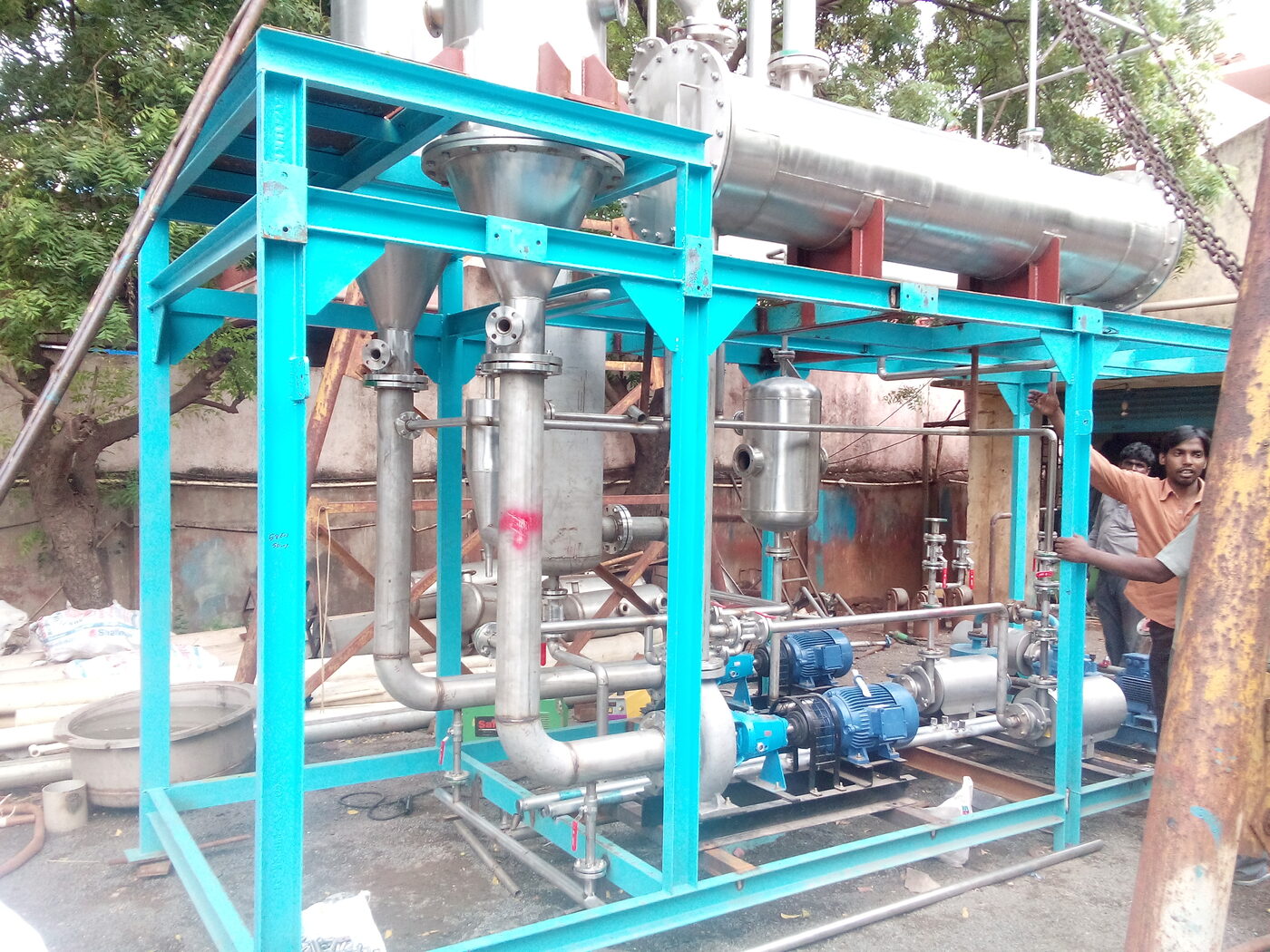
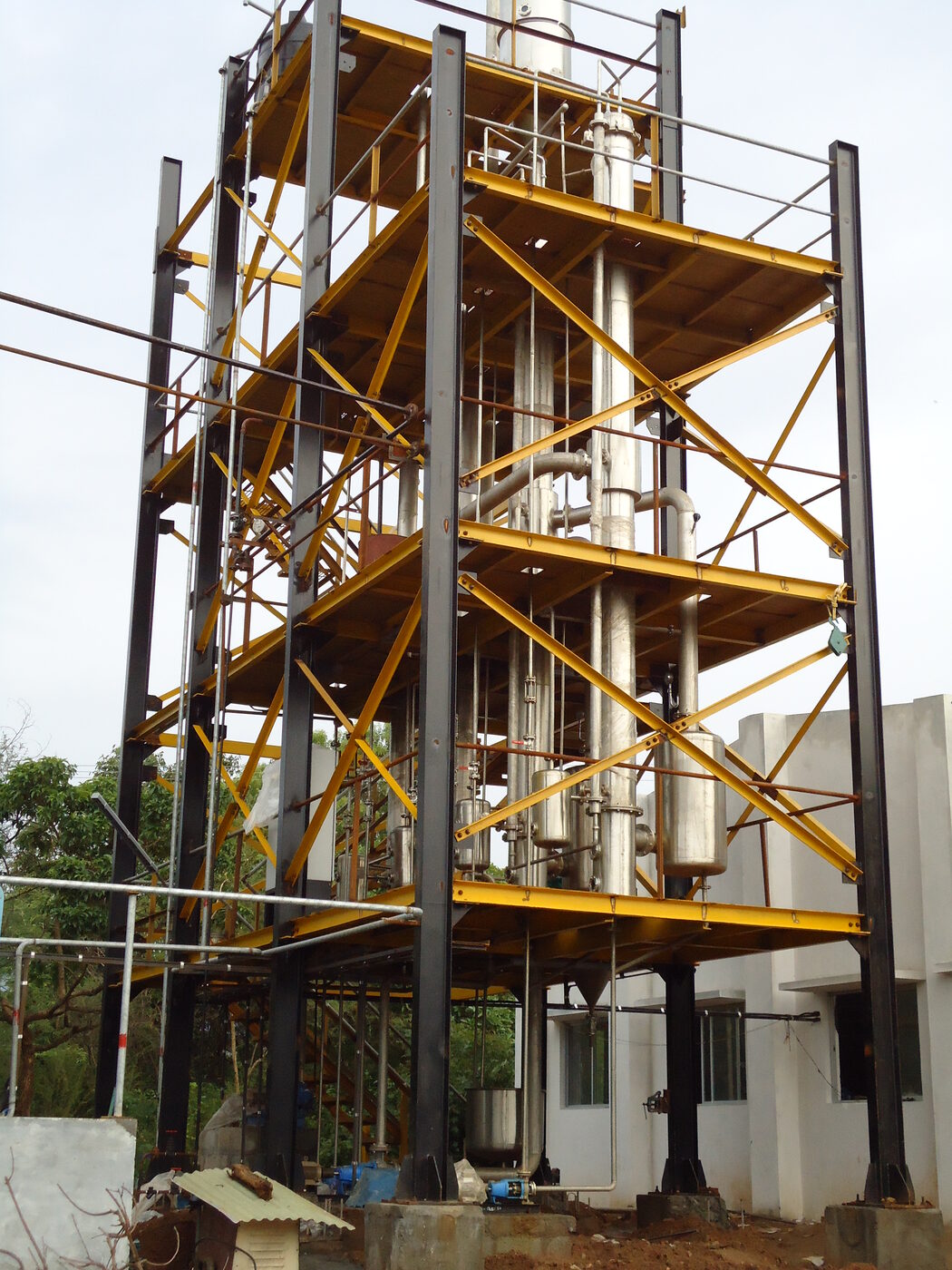
KWS Chiller Crystallizers recover salts from concentrated solutions by controlled cooling rather than evaporation. As the solution temperature falls, dissolved salts pass their solubility limit and crystallise out cleanly, leaving a depleted mother liquor. This process is particularly valuable for sodium sulphate (Glauber's salt) recovery from textile dyeing effluent — the sodium sulphate crystallises at low temperature while other contaminants remain in solution, enabling high-purity salt recovery. KWS has commissioned cold crystallizers for sodium sulphate at multiple CETPs in Tirupur and Perundurai, and hybrid chiller crystallizer systems for mixed-salt effluents. The recovered sodium sulphate is reused in the dyeing process, reducing chemical costs.
Key Advantages
High-purity salt recovery
Cooling crystallisation separates sodium sulphate (Glauber's salt) at 99%+ purity from dyeing and process effluents.
Chemical cost reduction
Recovered sodium sulphate is reused directly in the dyeing process, replacing purchased fresh chemical.
Low energy input
Cooling-based crystallisation avoids the steam energy of evaporative concentration, with only refrigeration electrical load.
Hybrid configurations
Hybrid chiller crystallizers combine cooling and evaporative concentration for mixed-salt streams requiring both Na₂SO₄ and NaCl recovery.
Technical Specifications
| Process | Cooling crystallisation to recover dissolved salts |
|---|---|
| Primary Salt | Sodium Sulphate (Na₂SO₄) — Glauber's Salt |
| Other Salts | MgSO₄, ZnSO₄, FeSO₄, NaCl (application-specific) |
| Construction MOC | SS 316L |
| Crystalliser Type | Cold (adiabatic) / Hybrid chiller / Draft tube |
| Standards | IBR / ASME |
| Delivery Timeline | 12 – 18 weeks |
Applications
- Sodium sulphate recovery from textile dyeing effluent
- Glauber's salt production for process reuse
- Magnesium sulphate, zinc sulphate, ferrous sulphate crystallisation
- ZLD mixed-salt crystallisation trains
- Chemical process salt recovery
Frequently Asked Questions
Why recover sodium sulphate by cooling rather than evaporation?
Sodium sulphate has an inverse solubility curve — it is less soluble at low temperatures. Cooling the solution selectively crystallises Na₂SO₄ while other salts remain dissolved, enabling high-purity separation that evaporative crystallisation alone cannot achieve.
Is the recovered Glauber's salt pure enough for reuse in dyeing?
Yes. Cold crystallisation from textile dyeing effluent typically yields sodium sulphate at 99%+ purity, suitable for direct reuse as a dye-dispersing agent in the dyeing process.
Related Products

Discuss your chiller crystallizers requirement
Share your feed type, capacity and concentration — our engineers respond within 24 hours.