MVR Evaporators
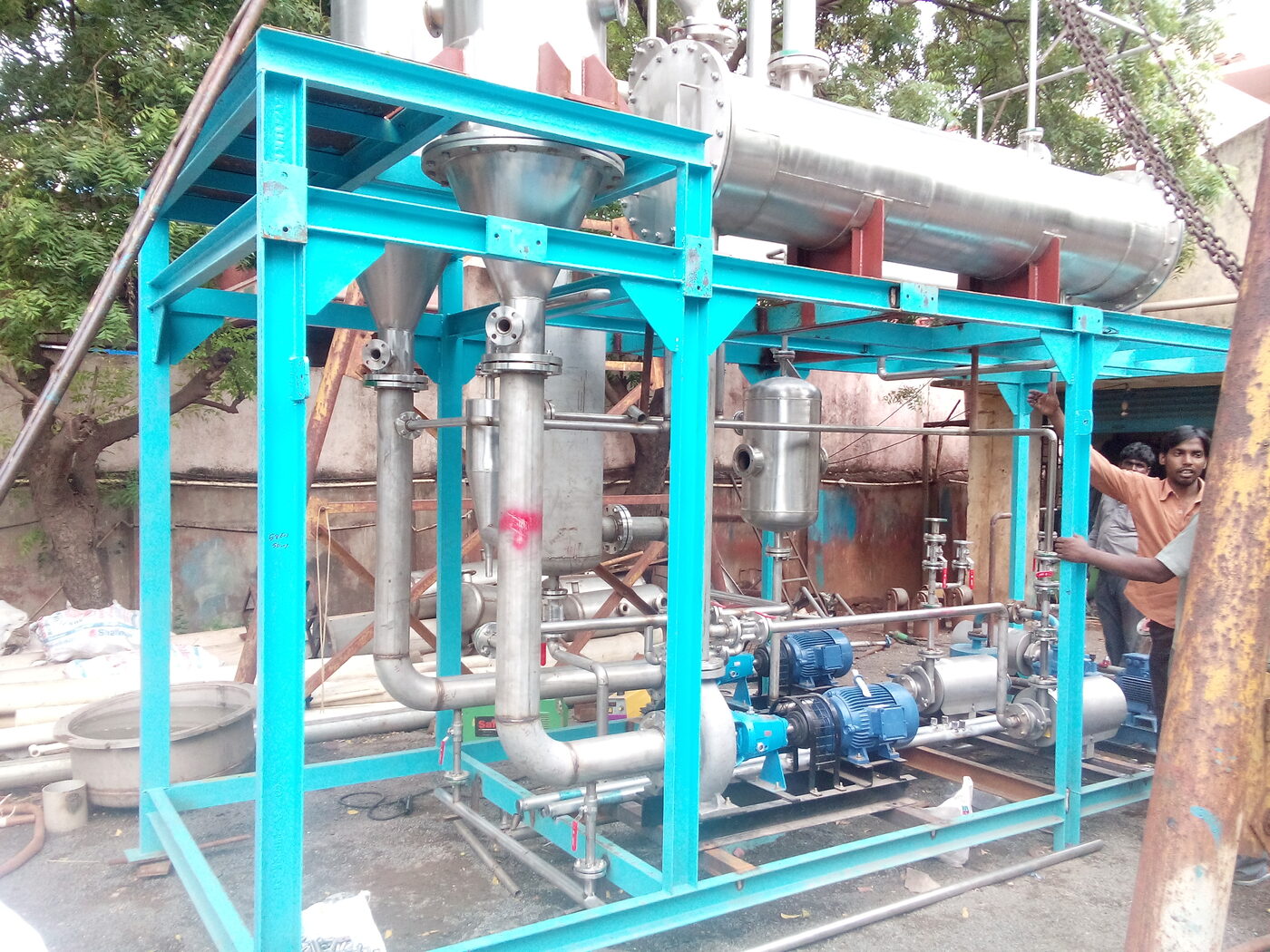
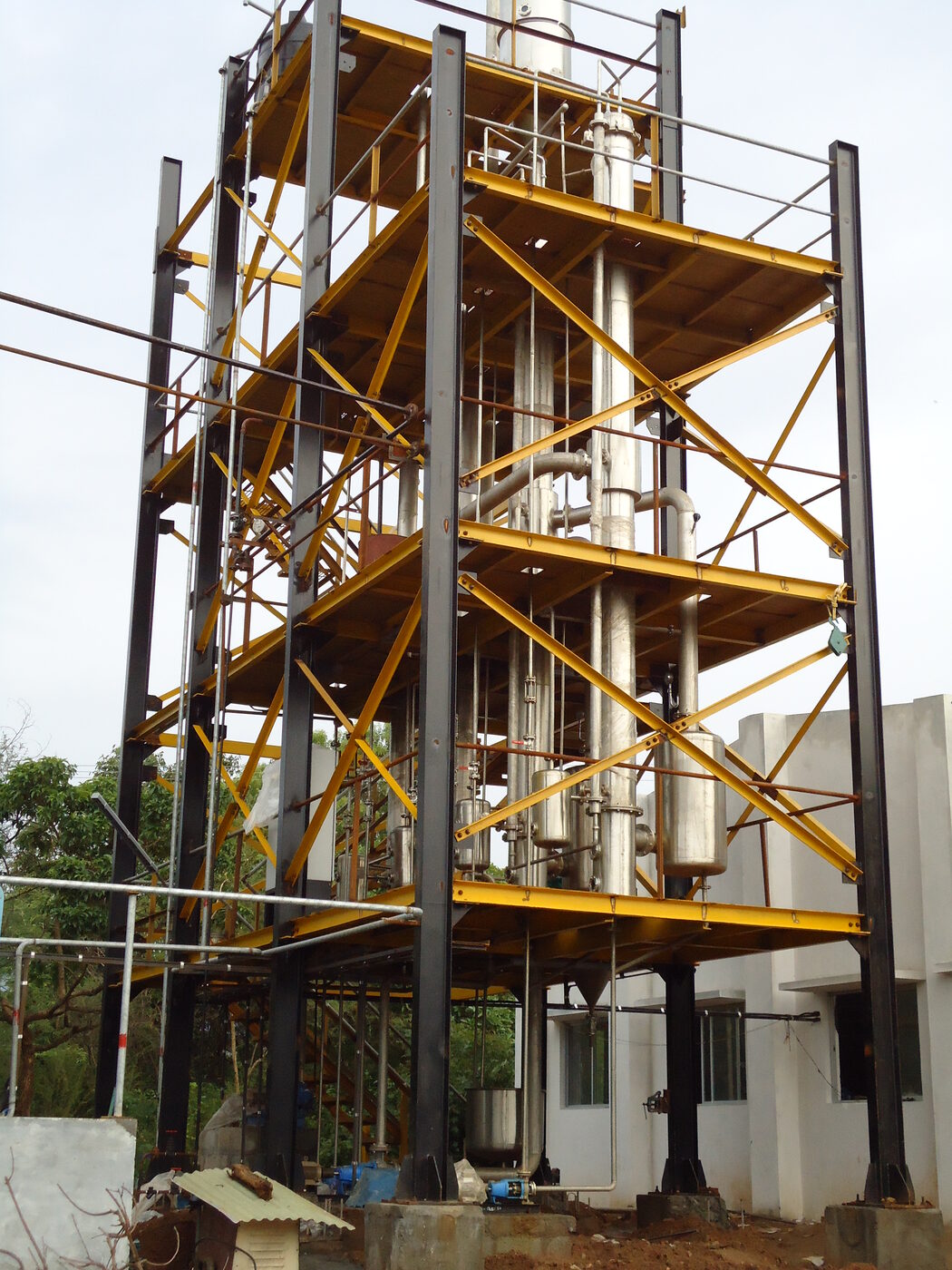
A KWS Mechanical Vapour Recompression (MVR) Evaporator recycles the secondary vapour generated during evaporation by compressing it with an electric fan or blower back to the pressure (and temperature) needed to heat the next evaporation cycle. Unlike multi-effect evaporation, which needs steam for each stage, an MVR system requires only a small quantity of start-up steam and then runs almost entirely on electrical energy — achieving steam economies of 40–60 kg evaporated per kg of steam equivalent, compared to 1–5 in conventional units. KWS designs MVR evaporators as standalone units or as a retrofit upgrade to existing MEE plants, targeting the highest possible steam savings at the lowest operating cost.
Key Advantages
Up to 95% less steam
Mechanical recompression of secondary vapour replaces most of the live steam requirement, slashing operating costs.
Lowest life-cycle cost
High capital cost offset by dramatically lower energy bills — typically the most economical choice where electricity is relatively cheap versus steam.
Single-body simplicity
MVR achieves multi-effect steam economy in a single evaporation body — reducing footprint and complexity.
MEE retrofit option
Can be added to an existing MEE plant to boost steam economy without a full replacement.
Technical Specifications
| Capacity Range | 500 – 50,000 L/hr |
|---|---|
| Construction MOC | SS 304 / SS 316L |
| Operating Pressure | Slight vacuum – atmospheric |
| Steam Economy | 30 – 60 kg/kg (vs. 0.9–1.0 single effect) |
| Compressor Type | Centrifugal fan / roots blower / turbo-compressor |
| Standards | IBR / ASME |
| Delivery Timeline | 12 – 18 weeks |
Applications
- Dairy — milk & whey concentration
- Food & beverage
- Chemical concentration
- Effluent & ZLD pre-concentration
- Pharmaceutical solutions
Frequently Asked Questions
When does MVR make economic sense over MEE?
When the site has cheap electricity relative to steam, or when steam is scarce. MVR typically shows a 3–5 year payback on the capital premium over MEE in Indian industrial conditions.
Can MVR handle fouling or viscous feeds?
MVR is best suited to low-to-moderate viscosity, non-fouling feeds. For fouling or crystallising streams, forced circulation MVR variants or MEE with TVR are better choices — KWS advises on the right configuration.
Related Products

Discuss your mvr evaporators requirement
Share your feed type, capacity and concentration — our engineers respond within 24 hours.