Multiple Effect Evaporators
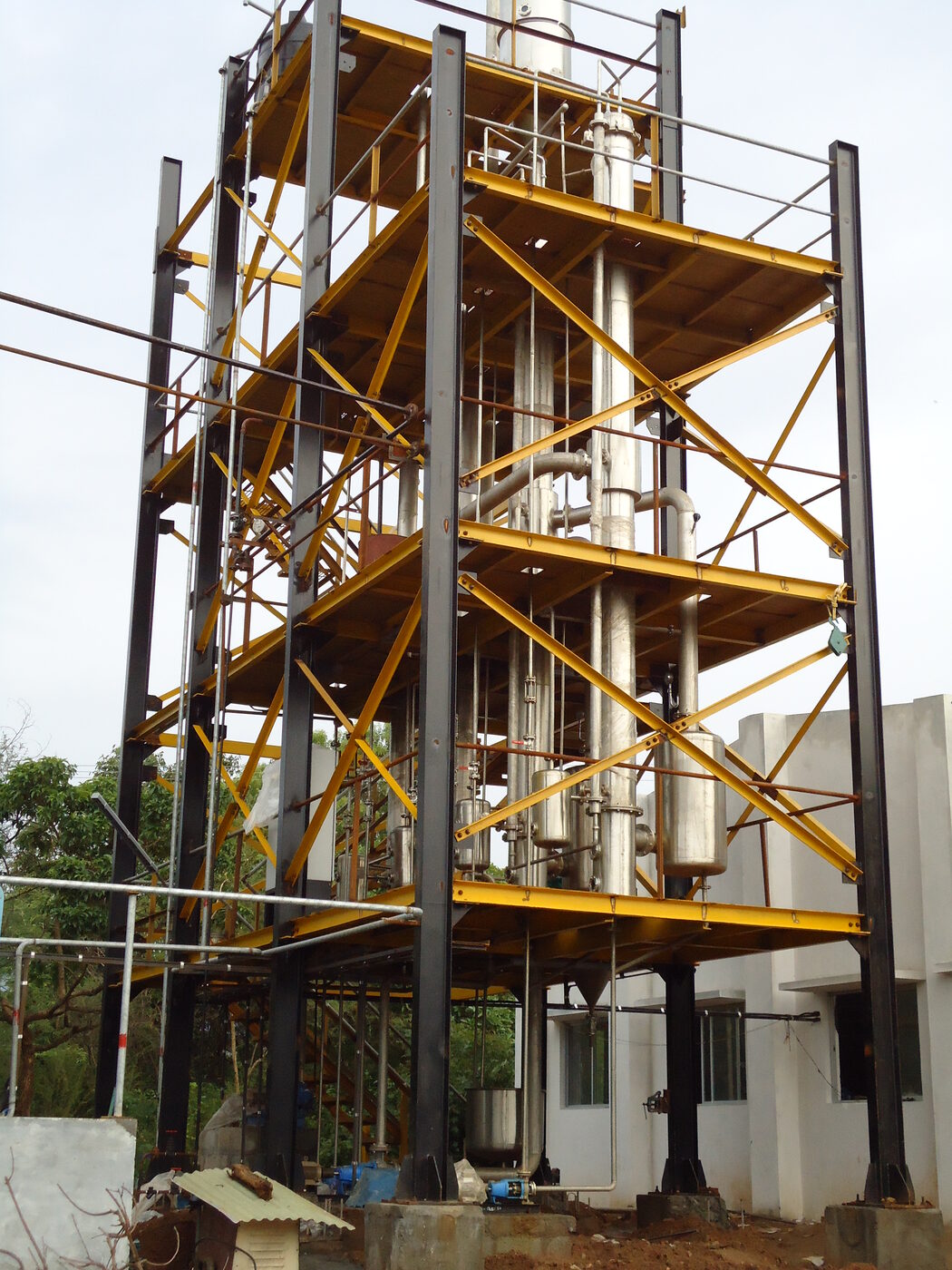
A Multiple Effect Evaporator (MEE) connects two to five evaporator bodies in series, using the vapour from each effect as the heating medium for the next. This cascading reuse of latent heat reduces steam consumption by up to 80% compared with a single-effect unit, making MEE the backbone of cost-effective effluent and process concentration. KWS engineers MEE plants — often with TVR or MVR — sized to feed chemistry, fouling tendency, and energy targets.
Key Advantages
Up to 80% less steam
Vapour reuse across effects delivers dramatic energy savings and fast ROI.
2–5 effect configurations
Effect count optimised against steam cost, cooling water, and capital for your site.
TVR / MVR enhancement
Thermal or mechanical vapour recompression further lifts steam economy where power is favourable.
Effluent & process duty
Falling film and forced circulation bodies combined to match each effluent or process stream.
Technical Specifications
| Capacity Range | 1,000 – 1,00,000 L/hr |
|---|---|
| Construction MOC | SS 304 / SS 316L |
| Operating Pressure | Vacuum – 5 bar |
| Steam Economy | 2.5 – 4.5 kg/kg |
| Configurations | 2 – 5 effects · TVR / MVR |
| Standards | IBR / ASME |
| Delivery Timeline | 12 – 20 weeks |
Applications
- Effluent treatment / ZLD
- Distillery & sugar
- Chemical & pharma
- Textile & dyeing
- Pulp & paper black liquor
Frequently Asked Questions
How many effects do I need?
More effects mean lower steam use but higher capital and surface area. KWS optimises the effect count against your steam cost, cooling availability, and payback target.
What is the difference between MEE, TVR and MVR?
MEE reuses vapour across effects; TVR uses a steam ejector to recompress vapour; MVR uses an electric compressor for the highest steam economy. They are often combined.
Related Products

Discuss your multiple effect evaporators requirement
Share your feed type, capacity and concentration — our engineers respond within 24 hours.